
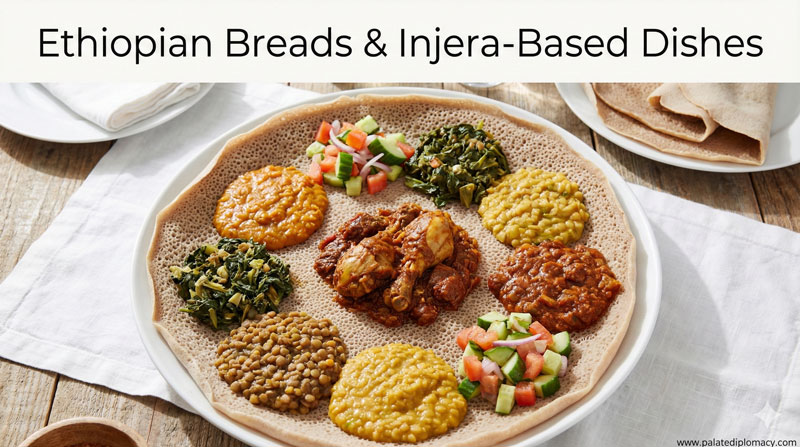
The Soul of Injera with Wat
Injera with wat invites travelers to slow down and savor a place through its food. This dish is a window into everyday life, where flavor, craft, and warmth come together at the same table. The experience rests on texture, aroma, and a shared moment that lingers long after the plate is emptied. For visitors, it becomes more than a meal; it becomes a memory of hospitality and culture.
The Canvas: Injera and the Craft of Fermentation
Injera is a soft, spongy flatbread made primarily from teff flour. Teff is a tiny grain with a deep tradition in the kitchen. The batter is left to ferment, creating a gentle tang and a bubbly surface. The result is a bread that soaks up sauces while adding its own subtle brightness to every bite. Most injera is made from teff, which is naturally gluten-free, though some kitchens blend teff with other grains. The aroma of fermenting batter and the sight of the large flat griddle tell a story of patience and careful timing. This artistry makes injera more than sustenance; it is a daily craft passed from maker to maker.
The Heart of Flavor: Wat, the Slow-Cooked Wonder
Wat Is a family of stews rich in color, aroma, and depth. Onion, garlic, ginger, and a blend of spices build a warm base that evolves through slow simmering. Berbere, ground peppers, and other seasonings weave heat and sweetness into the sauce. Each variation—whether lentil (misir), chickpea, beef, or chicken—offers a specific mood for the meal. Wat invites simmering care, letting ingredients meet and mingle until their flavors become harmonious. The result is a sauce that clings to the injera and invites you to scoop with confident, steady movements.
The Sensory Dance: Texture, Aroma, and Taste
The sensory magic of this dish rests on three notes. First is texture: the soft, slightly springy injera provides a gentle chew that cradles the wat. Second is aroma: the scent of spices and simmering onion fills the air and signals comfort. Third is taste: the tang of the bread plays against the richness of the stew, creating a balance that feels both bright and grounding. Travelers find that this trio engages the senses in a way that is calm, focused, and deeply satisfying. The result is a memorable impression that lingers as a favorite culinary moment.
The Shared Table: Etiquette, Hospitality, and Symbolism
Eating injera with wat is a communal act. Diners tear pieces of injera and use them to scoop the stew, guiding each bite with careful hands. The table becomes a circle of sharing, where conversations flow easily and everyone participates. A gesture called gursha—feeding another person a bite by hand—is a warm sign of generosity and togetherness. Right-hand eating is traditional, respectful, and practical in a setting where hands work together to enjoy the meal. This style of dining reflects a culture that values conversation, connection, and ease at the table.
A Traveler’s Perspective: Why It Captivates the Curious Palate
Travelers are drawn to injera with wat for its clear sense of place. The dish offers an honest portrait of daily life, where grain, spice, and hospitality converge. The hands-on dining ritual invites participation, making visitors feel welcome and included. The flavors reward curiosity: the tang of injera, the depth of wat, and the gentle warmth of spices create a balanced experience. In this simple meal, travelers find a doorway to local storytelling, craft, and seasonal ingredients that define the region’s culinary soul.
From Field to Table: The Cultural Craft of Ingredients
This dish reflects more than taste; it reveals a cycle of farming, milling, and cooking. Teff grains often come from local fields, where climate and soil shape small harvests cherished by communities. The stews rely on fresh aromatics and carefully chosen spices that travel from market stalls to pot to plate. A meal of injera with wat celebrates regional pantry staples, seasonal readiness, and the skill of cooks who blend tradition with quiet innovation. The result is a culinary practice that honors land, labor, and shared abundance.
A Gentle Invitation to Taste and Reflect
Injera with wat invites travelers to pause, listen to the kitchen, and join a circle of eating that respects time and craft. The dish offers nourishment for the body and a sense of belonging for the heart. If you seek a meal that speaks softly of culture, skill, and hospitality, this is a warm invitation. Taste, texture, and togetherness await at a table where every bite is a memory in the making.