
Exploring Venezuelan Sides: Regional Variations and Culinary Significance
Venezuelan cuisine is renowned for its vibrant flavors and diverse ingredients, with Side Dishes playing a vital role in creating balanced and memorable meals. Among these, the regional variations of Venezuelan sides stand out for their cultural richness and culinary diversity. These dishes not only complement main courses but also serve as a window into the country’s rich culinary heritage, reflecting local ingredients, traditions, and tastes.
The Cultural Value of Venezuelan Side Dishes
Venezuelan sides are more than just accompaniments; they are integral to the country’s food identity. Each region offers unique flavors and preparations, highlighting local produce and culinary techniques handed down through generations. For example, in coastal areas, the use of fresh seafood influences side dishes like flavored cassava salads, whereas inland regions might feature hearty rice and bean combinations.
These sides offer a sense of community and tradition. They are often prepared for family gatherings, festivals, and everyday meals, emphasizing the importance of sharing and togetherness in Venezuelan culture. This communal aspect elevates the simple act of sharing sides into a celebration of life and local heritage.
Culinary Significance and Regional Variations
Venezuelan side dishes are celebrated for their variety and adaptability, showcasing regional ingredients and culinary influences. Here’s a look at some notable regional variations:
-
Andean Region: This area is known for its hearty sides such as Arepas de Choclo—sweet corn arepas—and Yuca con Mojo, a tender cassava dish seasoned with garlic and herbs. These sides reflect the highland terrain and the agricultural bounty of the region.
-
Guayana Region: Sides here often incorporate tropical fruits and root vegetables. Mosha, a dish made from mashed plantains or taro, is popular, highlighting the rich, fertile soil of the area.
-
Coastal Regions: The coast is famous for its fresh seafood-inspired sides, such as Ensalada de Gallina, a shredded chicken salad with vegetables and mayonnaise, and Pargo en Escabeche, a marinated fish dish served cold. These dishes emphasize the freshness of the ocean’s bounty.
-
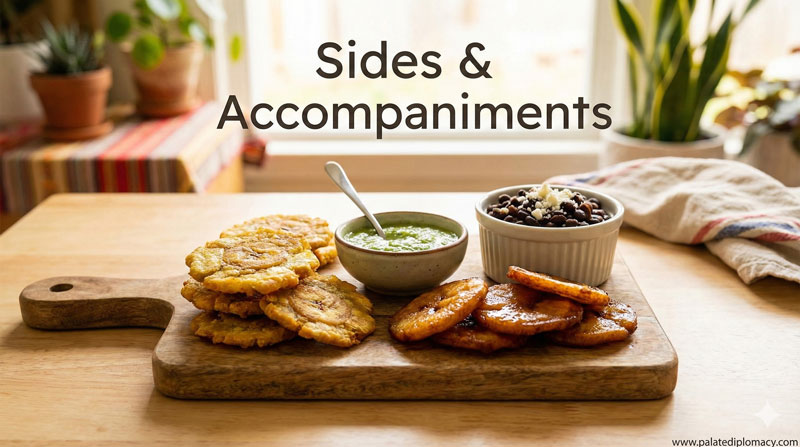
Llanos (Plains): The expansive plains produce sides like Arroz con Caraotas (rice with black beans) and Patacones (fried green plantains), staples that reflect the region’s pastoral lifestyle and agricultural abundance.
Celebrating Diversity and Local Flavors
Each regional variation of Venezuelan sides embodies the local flavors, climate, and cultural practices. They serve as a testament to the country’s culinary adaptability and creativity. Whether it’s the simplicity of seasoned yuca or the vibrant notes of tropical salads, these sides enrich the dining experience.
Food enthusiasts and cultural explorers alike find joy in discovering the regional differences, which add depth to Venezuela’s culinary landscape. They remind us that food is a living tradition—constantly evolving yet rooted in history and community.
The Enduring Appeal of Venezuelan Sides
The beauty of Venezuelan sides lies in their diversity and the stories they tell. They enhance the main course while standing as proud symbols of regional identity. Exploring these dishes offers a delicious journey into Venezuela’s culinary soul, revealing the country’s love for fresh ingredients, bold flavors, and shared experiences.
Whether enjoyed at a festive gathering or a family dinner, these sides celebrate the vibrant tapestry of Venezuela’s food culture. They invite us to appreciate the simple yet profound pleasures of regional culinary artistry.
By exploring the regional variations of Venezuelan sides, you uncover more than just flavors—you discover a story of tradition, local pride, and culinary innovation. These dishes remind us that food is a universal language, connecting us through taste, history, and culture.