
Introduction: Top Reasons Ethiopians Love Injera
Injera sits at the heart of Ethiopian meals. This sour, spongy flatbread is more than a dish; it is a welcome mat for many gatherings. Made from teff, injera carries a warmth that invites conversation and shared care. It acts as a natural plate, a utensil, and a symbol of hospitality. When people sit around a table, injera helps shape the texture and flow of the meal. It is a comforting, everyday treasure that Ethiopians honor with quiet pride.
Texture and Flavor: A Sensory Portrait
The batter for injera ferments slowly, giving the bread its distinctive tang. The surface boasts tiny holes, or eyes, that trap sauces and juices. This porous texture keeps each bite juicy and balanced. The crumb is soft yet sturdy enough to scoop up rich stews. The flavor is bright and slightly sour, a result of time and tradition. Each bite feels airy and resilient, a testament to careful preparation and patient patience. In short, injera wakes the senses without overpowering the elements it accompanies.
A Plate and a Practice: Injera as Centerpiece
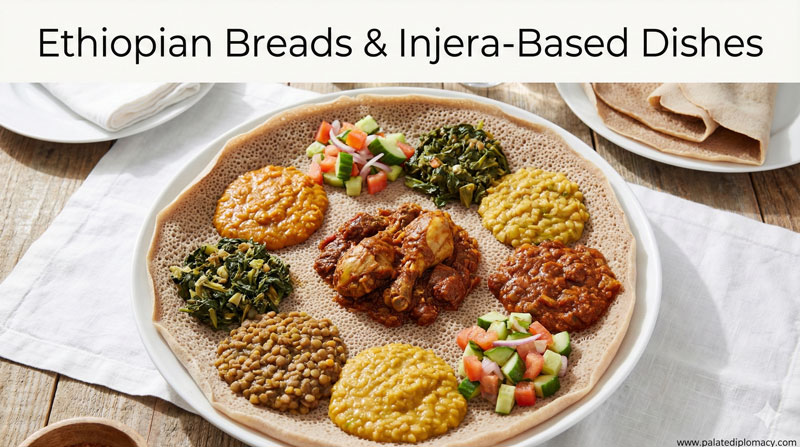
Injera serves as both plate and companion. Pieces are torn and handed around, inviting everyone to share. Dishes are placed on or beside the injera so diners scoop morsels with their bread rather than using tools. This practice encourages slow, mindful eating and eye-to-eye connection at the table. The bread becomes a gentle guide, supporting the flavors of stews and vegetables while keeping the meal cohesive. In Ethiopan dining, injera is more than sustenance; it is the frame that holds the feast together.
Teff, Tradition, and Nutrition
Teff is the star grain behind traditional injera. Its tiny kernels carry a nutty, earthy note that deepens the bread’s character. Teff is prized for its minerals, fiber, and protein, making injera a nourishing foundation for a meal. This grain grows well in Ethiopia’s highlands, where climate and soil contribute to Its Unique profile. When Ethiopians eat injera, they taste centuries of farming, regional varieties, and careful harvesting. The result is a dish that feels rooted in place and time, yet lively in its everyday presence.
Versatility on the Table: Wats, Sides, and More
Injera welcomes a spectrum of accompaniments. Classic wats, or stews, pair beautifully with its tang and texture. Lentil misir, chickpea shiro, and savory greens create a colorful, balanced plate. The bread’s mild acidity smooths the heat and spices, letting bold flavors shine without overpowering them. Even simple combinations feel complete when wrapped in injera. Its versatility makes it a reliable partner across meals and seasons, inviting cooks to improvise with seasonal vegetables and traditional spices.
Craft and Craftsmanship: The Making of Injera
Crafting injera is a thoughtful process. Teff flour is mixed with water and left to ferment, developing a lively culture of tiny bubbles and depth of flavor. The batter is then poured onto a large, round clay griddle called a mitad and cooked in one generous circle. The result is a soft, flexible sheet with a glossy, slightly spongy surface. The skill lies in timing, temperature, and patience. When done well, injera holds together through long meals and helps ingredients mingle in harmony. The craft honors both the baker and the meal at hand.
A Shared Moment: Family and Community
Mealtime in Ethiopia often centers around the family or community kitchen. Injera fosters conversation, caregiving, and shared enjoyment. Generations pass down tips for fermentation, tearing techniques, and cooking timing. The table becomes a space where stories are told, recipes are refined, and bonds are strengthened. In this context, injera is more than food; it is a ritual of togetherness. The bread invites everyone to participate, listen, and savor, creating a warm, inclusive dining experience.
A Living Tradition: The Beauty of Injera
The love Ethiopians hold for injera comes from its balance of simplicity and depth. It embodies hospitality, regional pride, and culinary ingenuity. The bread’s texture, tang, and adaptability reveal a culture that values comfort, sharing, and craft. As a centerpiece, injera frames a meal with grace and ease, allowing flavors to mingle and memories to form. For anyone exploring Ethiopian Cuisine, injera offers a doorway into a rich, respectful food culture—inviting, delicious, and timeless.