
Why Travelers Are Falling in Love with Injera with Wat
Travelers search for flavors that tell a story. They crave warmth, hospitality, and a sense of place. Injera with wat delivers all three. The dish invites you to slow down and listen to the sizzle, the fragrance, and the shared moment around a round platter. It is approachable, deeply comforting, and endlessly inviting.
What is Injera?
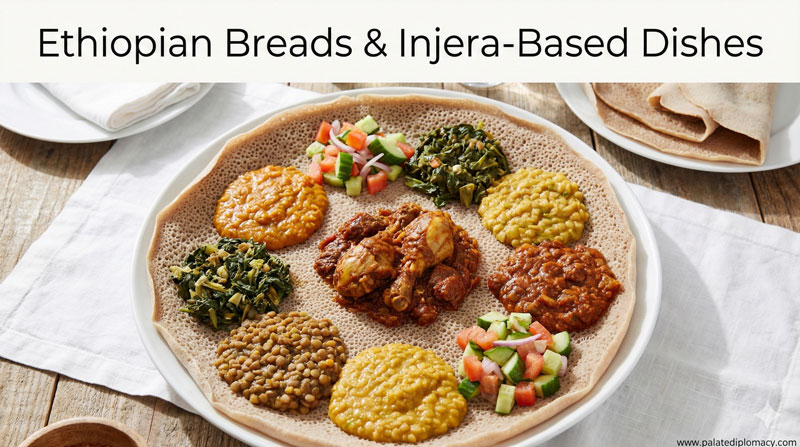
Injera is a sour flatbread made from teff flour. The batter ferments, giving a bright tang. It cooks on a flat griddle to form a large, thin circle. The surface is porous and spongy, full of tiny holes. You eat injera with your hands, tearing off a piece to scoop. The bread itself becomes the plate, the utensil, and a companion to every bite.
What is Wat?
Wat Is Ethiopian stew. It thickens with simmered vegetables, lentils, or meat. Spices bloom in the mix, especially berbere and other fragrant powders. Wat carries warmth and depth, balancing heat, sweetness, and savory spice. Each bite blends with the tang of injera for a complete sensation.
The Cultural Value of Injera
Injera sits at the heart of many meals. It brings people together around a single shared loaf. Serving food on injera makes hospitality tangible. Guests are welcomed with generosity, and the table becomes a space for conversation and connection. The meal honors tradition while inviting curiosity. This setting lets travelers feel a link to everyday life, not just a moment of tasting.
Culinary Significance and Technique
The craft behind injera blends memory and skill. Teff flour provides a distinct, nutty note and a delicate sourness. Fermentation heightens aroma and texture. The batter rests, then cooks into a soft, resilient sheet. Chefs balance heat to create even holes without losing suppleness. Wat requires patience and steady simmering. Together, injera and wat showcase a harmony of sour, savory, and comforting warmth.
The Traveler Experience
Travelers describe a comforting, almost lyrical meal. The smell invites curiosity. The tang of injera brightens each bite. Wat’s richness warms the palate. The texture—soft, with a gentle chew—complements the bite-size pieces of meat or lentils. The whole experience feels rooted in tradition and alive with present flavors. It’s easy to imagine days spent sharing food, stories, and smiles around the table.
How to Enjoy Like a Local
Begin by tearing a piece of injera. Use it to scoop wat and other components. Tear smaller bites to combine textures and flavors. Let the warmth of the dish carry you from one bite to the next. If offered, try different wats to discover varying spice profiles. Eat slowly, savoring how the sour bread carries the ingredients. This mindful approach reveals the dish’s balance and craft.
Tips for a Rich Experience
- Choose a place that serves a full injera platter to see the variety of wats.
- Look for teff-based injera for the authentic texture and flavor.
- Pair with fresh vegetables or lentils to explore contrasts.
- Notice how the bread and stews mingle on the plate and in your mouth.
Conclusion
Injera with wat is more than a meal; it is a gateway to a living food culture. The dish captures hospitality, technique, and a timeless balance of flavors. For travelers, it offers a memorable, respectful, and deeply satisfying culinary journey.