
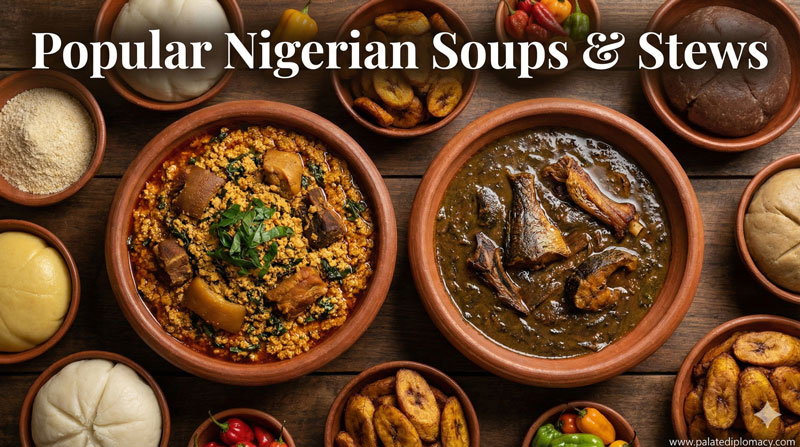
A Glimpse into Okra Soup
Okra soup is a bright, velvety dish built around tender okra pods. Travelers often meet it in markets, homes, and roadside eateries. The recipe centers on fresh ingredients: okra, palm oil for color and depth, peppers for warmth, and a choice of meat or fish. The result is a glossy, comforting soup that invites the spoon. Its texture blends smoothness with the gentle bite of vegetables, offering a balanced and satisfying experience.
A Traveler’s Experience: Senses and Hospitality
Steam curls above the pot as green pods shimmer in the light. The aroma mingles with herbs and smoke from the fire. A bowl arrives, accompanied by smiles and friendly chatter. People share from a common pot, savoring each bite together. The dish gives a sense of welcome, a signal that a table is open and a moment of calm awaits.
The Soul of the Market: Fresh Ingredients
Markets pulse with color and life. Vendors display fresh okra, bright peppers, and rich palm oil. Dried fish and spices wait nearby. Farmers, fishers, and cooks meet daily, trading tips and ideas. This scene shows how tradition stays alive: through access to fresh ingredients and the care of hands that know them well.
Techniques that Define Texture and Flavor
Cooks treat the okra with intention. Some simmer slowly to coax a silky body, while others add a quick, bright burst of heat for more bite. Palm oil lends depth and a warm glow to the broth. A touch of onion, pepper, and seasoning lifts the flavor, while a final stir keeps the soup glossy. Each step highlights the natural earthiness of the ingredients.
Pairings and Traditional Accompaniments
Okra soup shines when paired with a sturdy starch. People often serve it with fufu, pounded yam, banku, or rice. The starchy side Makes It easy to scoop and soak up the broth. A portion of fish or meat adds richness. Fresh herbs finish the plate, bringing brightness to the final bite.
Regional Variations: A World of Subtle Differences
Across West Africa and beyond, cooks adapt the dish to local tastes. Some add a touch of tomato for brightness; others rely on palm oil for color and depth. The level of heat may vary, and the choice of protein shifts with what’s available. Yet the core idea remains: a flexible, flavorful soup that celebrates regional character.
The Cultural Value: Storytelling and Shared Meals
Okra soup often sits at The Heart of gatherings. Families plan meals around it, and cooks preserve cherished recipes for the next generation. The dish invites conversation, as flavors are explained and memories are shared. Serving with care and rhythm teaches balance, patience, and gratitude for wholesome ingredients and skilled hands.
Practical Tips for Travelers: How to Enjoy It Respectfully
Ask about ingredients if you have allergies or preferences. Try the traditional pairing to experience the full texture and flavor. Observe local etiquette around sharing and serving. A warm smile goes a long way when meeting the cook. Take time to notice the aroma, color, and mouthfeel, and respect the names that locals use for the dish.
Conclusion: Why Travelers Fall in Love
Okra soup invites travelers to slow down and savor the moment. It celebrates fresh produce, thoughtful technique, and the warmth of hospitality. The dish offers texture, aroma, and heart in every bite. In a single bowl, it mirrors the place it comes from—rich in flavor, generous in spirit, and welcoming to all who arrive with curiosity and appetite.