
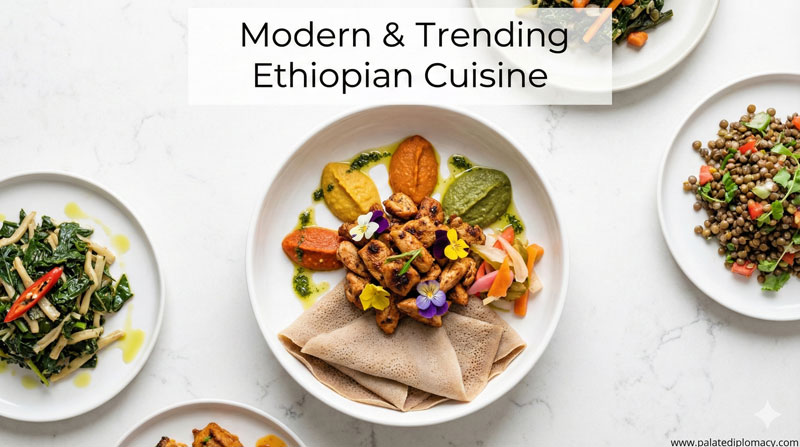
Why Travelers Are Falling in Love with Fusion Injera Dishes
Travelers crave meals that tell a story. Fusion injera dishes do just that. They take the traditional, sour-sweet base of injera and pair it with global flavors. The result is a bright, inviting plate that feels both familiar and adventurous. The dish invites curiosity, then rewards it with balance and texture. Each bite speaks of craft, seasonality, and care. Travelers discover that food can honor a heritage while welcoming new ideas. Fusion injera becomes a shared language for taste and culture.
Injera as a Living Vessel: Texture, Fermentation, and Technique
Injera starts with the batter. Teff flour gives a nutty note and a tender crumb. The batter ferments, creating tiny bubbles and a subtle tang. When cooked, injera becomes a soft, spongy platform. This texture is key. It soaks sauces without becoming soggy, and it loosens the way we eat. The bread itself carries The Story of practice and patience. In fusion plates, injera holds bold toppings and delicate garnishes alike. The result is harmony between base and filling, a canvas for flavor to roam freely.
The Magic of Fusion: Blending Old and New
Fusion injera is a creative dialogue. Chefs mix Ethiopian technique with ingredients from other cuisines. The goal is harmony, not clash. A smoky pepper sauce might meet a bright citrus note. Grilled vegetables can rest on a soft, sour surface. Even simple toppings become new with careful balance. Travelers notice how well these combinations shine: the familiar comfort of injera, the excitement of new flavors, and a sense of culinary exploration in every bite.
A Shared Table: Culture of Hospitality
Injera is deeply social. It invites sharing, conversation, and warmth. Families tear pieces for everyone at the table. They scoop stews with their fingers and pass dishes around with a smile. Fusion varieties keep that spirit alive. They encourage guests to sample multiple tastes and textures. The act of gathering, then tasting together, becomes part of the experience. Hospitality shines through the care in preparation and the joy of discovery.
Flavor Journeys: Pairings and Dishes on a Global Plate
Fusion injera supports a wide range of flavors. A classic Ethiopian wat can meet a tangy kimchi for a playful bite. Avocado and lime bring creaminess to a zesty sauce. Grilled mushrooms, onions, and peppers sit on a sour base that carries the sauce gracefully. Some plates layer herbs, sesame, or fresh herbs for brightness. The result is a plate that feels both rooted and adventurous. Each combination highlights how versatile injera can be as a durable, flavorful base.
Techniques and Tips for Crafting Fusion Injera at Home
Begin with a reliable teff-based batter. Allow it to ferment overnight for depth of flavor. Cook on a hot, well-seasoned pan to form delicate edges. Keep the heat steady to avoid ripping the surface. Use a light touch when layering toppings. Balance heat, acidity, and richness so nothing overwhelms the sour profile of injera. Finish with fresh herbs or citrus zest to lift the plate. With practice, home cooks discover how simple techniques unlock sophisticated results.
The Journey Continues: Why It Feels Fresh
Travelers sense novelty without losing comfort. Fusion injera offers both—familiar texture and surprising ingredients. The dish remains respectful of its roots while inviting new ideas. It becomes a bridge between kitchens, a way to enjoy a shared food moment that travels well. The experience emphasizes craft, seasonality, and hospitality. In this light, fusion injera is not just food; it is a tiny celebration of culinary curiosity.
Conclusion: A Rich, Welcoming Culinary Moment
Fusion injera dishes celebrate culture through flavor and form. They honor traditional techniques while inviting global influence. The result is vibrant plates that invite conversation and connection. For travelers and diners alike, injera becomes a doorway to new ideas, textures, and tastes. It is a meal that feels generous, thoughtful, and endlessly inviting.