
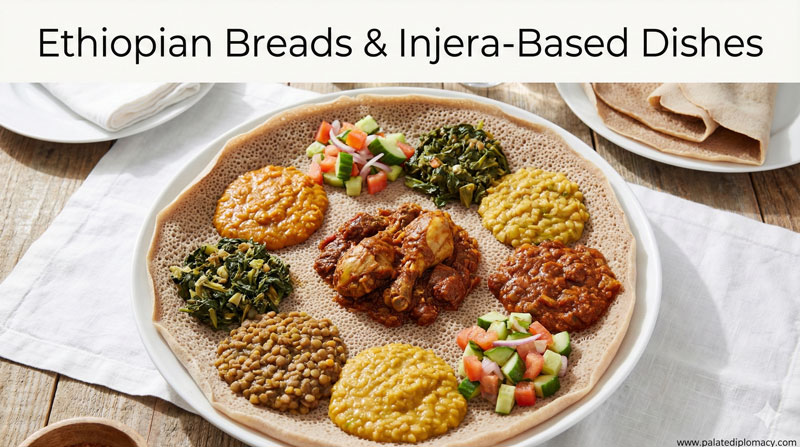
A Welcome Plate: Injera with Wat
Travelers often pause at a table that radiates warmth and history. Injera with wat offers such a welcome. The sour, spongy injera forms the edible plate, while wat, a thick stew, fills the senses with spice and depth. The experience feels generous, patient, and inviting. It is the kind of dish that makes a traveler slow down, listen to the rhythm of the meal, and savor every bite.
The Craft Behind Injera
Injera begins with teff flour, a tiny grain with a big role in Ethiopian kitchens. The batter is mixed with water and left to ferment, a process that builds a delicate tang and a light, porous texture. The heat of the pan turns the batter into a soft, slightly blistered pancake. Each bite carries a whisper of fermentation, a gentle sourness balanced by the grain’s natural sweetness. Injera doubles as a plate, bread, and utensil all at once, shaping the rhythm of the meal and the tempo of conversation.
Wat: The Heart of Flavor
Wat Is a study in patience and balance. It ranges from lentil and chickpea varieties to meat stews that simmer slowly with spices. Berbere, a bold blend of chili, garlic, ginger, and other aromatics, lends warmth without overpowering. The result is a stew that clings to the injera, inviting touch and multiple scoops. When travelers taste wat, they often notice how the flavors unfold—first a gentle aroma, then a layered heat, and finally a lingering, comforting finish. The dish showcases how simple ingredients can become memorable through time and technique.
A Shared Ritual at the Table
Eating injera with wat centers on togetherness. Diners tear a piece of injera and use it to scoop up wat, dipping and gathering the stew in a single, continuous motion. The table becomes a circle of sharing, where everyone participates in the same movement, and the meal flows with quiet cooperation. This ritual feels timeless, and yet it is refreshed with every gathering, reminding travelers that food is a social glue as much as it is nourishment.
Senses on the Plate
The plate is a theater of contrasts. The injera’s soft, springy texture gives way to a satisfying chew. The wat offers a blend of smoky, earthy, and bright notes, depending on the spice mix and ingredients. The aroma swirls with cumin, garlic, and pepper, inviting a second or third bite. Each mouthful builds a comforting memory—the warmth of spices, the sour note of the bread, and the way the flavors linger on the palate.
Teff and Tradition
Teff is more than a grain; it is a thread in a long culinary tradition. Its tiny kernels pack nutrition and resilience, and teff’s gluten-free profile makes injera accessible to many diners. Across generations, households have refined their batters, fermentation times, and cooking temperatures. Travelers taste not only a dish but a living practice that connects people through shared meals and harmonious flavors.
Travelers and Taste: A Global Welcome
What draws travelers to injera with wat is the sense of hospitality on the plate. The dish invites exploration—different wat variations, regional tweaks, and personal family twists—while preserving a universal approach: break bread, share, and enjoy. The experience is calm, flavorful, and memorable, often inspiring conversations about food, care, and craft. In this way, the dish becomes a gentle ambassador of Ethiopian culinary art, welcoming visitors with generosity and grace.
How to Enjoy It Respectfully
Approach the meal with calm curiosity. Tear a piece of injera, scoop wat with it, and savor the balance of textures. Notice how the bread soaks up the sauce without becoming soggy. Respect the sequence of flavors by letting the spices unfold on the palate. If you try a milder wat, you may discover subtler notes that complement the tang of injera. The goal is to experience harmony: texture, aroma, warmth, and a sense of welcome.
A Short Guide for First-Timers
- Start with a small portion of injera and a modest bite of wat to sense the balance.
- Try a few levels of heat if the wat offers spice; allow the flavors to reveal themselves gradually.
- Observe the texture: the injera should be soft enough to tear yet sturdy enough to hold the sauce.
- Share, listen, and enjoy the moment as much as the food.
Injera with wat is more than a meal; it is a cultural invitation. It invites travelers to slow down, to witness careful cooking, and to join in a ritual of sharing that nourishes both body and curiosity. The dish stands as a bright, inviting thread in the fabric of culinary culture, celebrated for its texture, warmth, and timeless hospitality.