
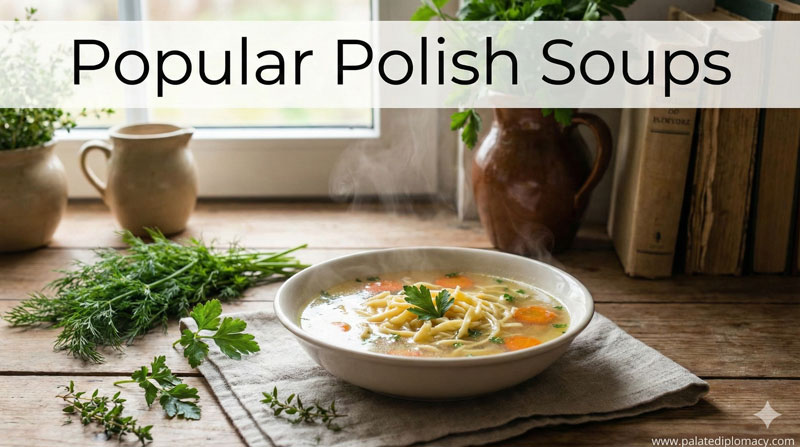
A Warm Introduction to Zupa Ogórkowa
Zupa Ogórkowa, or cucumber soup, holds a proud place in Polish Cuisine. It is simple yet bright, comforting yet festive. A pot of this soup welcomes guests to the table with a clear aroma of dill and a gentle tang from pickle brine. Its charm lies in balance: brisk vegetables, creamy texture, and a policy of leftovers becoming something new the next day. This dish speaks to the everyday beauty of Polish home cooking and to the shared moments around a family pot.
Core Ingredients and Simple Techniques
At the heart of Zupa Ogórkowa are humble, accessible ingredients. Potatoes and carrots form a nourishing base. Onions add sweetness, while chopped or grated cucumber from kiszone ogórki brings the signature tang. Dill lends a fresh, grassy note, and sour cream or a splash of milk adds smoothness. The soup may begin with a light sauté, then simmered in water or stock until everything is tender. Cooks often mash a portion of the vegetables to achieve a creamy texture without heavy cream. Finally, the soup is seasoned with salt, pepper, and a touch more dill to finish. The result is a bright, comforting bowl with a gentle if lively personality.
The Dish in Polish Home Life
Zupa Ogórkowa thrives in the rhythm of Polish family life. It appears on Sunday tables, cozy weeknight meals, and informal gatherings. The recipe is a living tradition, handed from one generation to the next, with each cook adding their quiet signature. This continuity celebrates care and hospitality. When a family ladles the soup, there is a sense of welcome and steadiness. The dish invites conversation, shared stories, and a moment to slow down and savor the present.
Flavor Craft: Balancing Sourness, Creaminess, and Texture
What makes the dish special is its careful flavor balance. The sour tang comes from the cucumber brine, complemented by a mild dairy finish. Creaminess arrives from sour cream or milk, enriching the broth without heaviness. Texture plays a crucial role: nestled potato chunks, soft vegetables, and the bright crispness of dill. The result is a soup that remains light enough to enjoy as a starter and sturdy enough to satisfy a hearty appetite. The technique rewards attention in small details, such as the timing of adding dairy and the final dollop of fresh herbs.
Regional Twists and Modern Takes
Across Poland, cooks adapt Zupa Ogórkowa to personal and regional tastes. Some favor a lighter version with more broth and less cream. Others enrich the pot with extra potatoes or a touch of onion caramelization for depth. A few households include a bit of meat for savor, while others keep it plant-based with a clear vegetable stock. Dill, pepper, and a pinch of garlic are common ways to tailor the aroma. These variations honor local pantry staples and family preferences, showing how the dish evolves while remaining unmistakably Ogórkowa.
Serving Traditions and Table Moments
Traditionally, this soup is served hot, often with a slice of crusty rye bread or a fresh roll. A spoonful of sour cream on top adds extra silkiness, followed by a final scattering of dill. The presentation is modest, yet inviting. In many homes, the steam, aroma, and appearance set the tone for a warm meal and thoughtful conversation. The serving ritual reinforces a sense of care and community around the table.
Why This Soup Endures in Polish Cuisine
Zupa Ogórkowa endures because it celebrates everyday brilliance. It turns simple, inexpensive ingredients into something comforting and memorable. It adapts with time and taste, offering room for tradition and personal touch. It embodies hospitality, family memory, and a shared appetite for honest flavors. In every bowl, there is a story of home, friendship, and the everyday beauty of Polish culinary craft.
Ultimately, Zupa Ogórkowa stands as a testament to the charm of Polish cooking: straightforward, soulful, and warmly inviting.