
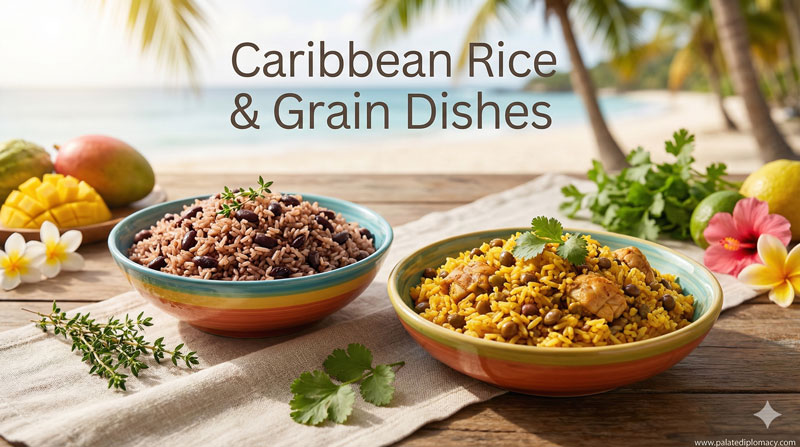
Introduction: How Coconut Rice Found a Place in Caribbean Kitchens
Coconut rice is a bright, welcoming dish. It pairs creamy coconut with tender grains of rice. Its aroma fills kitchens and markets with sunshine. In Caribbean homes, the dish signals care and hospitality. It invites friends and family to share a simple, satisfying meal.
The Core Elements: Simple Ingredients, Strong Flavor
Coconut rice centers on three things: good rice, coconut milk, and a touch of salt. The rice is usually long-grain for a light, fluffy texture. Coconut milk adds sweetness, fat, and a silky mouthfeel. Step by step, cooks simmer the grains until the liquid absorbs and the grains stand apart. The result is a dish with a gentle sheen and a balanced, creamy finish.
Everyday Meals and Shared Moments
This dish thrives in daily meals. It serves as a reliable base for stews, beans, or fried vegetables. Families prepare it on busy weeknights and on slower weekends alike. The kitchen fills with a comforting aroma, signaling that dinner is near. In every pot, coconut rice carries a sense of welcome and routine.
Regional Flavors: Variations Across Caribbean Islands
Across islands, cooks add small regional touches. In some places, a hint of thyme or scallions brightens the pot. A pinch of garlic enhances depth, while a splash of lime lifts the finish. Some preparations use coconut water for lighter sweetness; others rely on richer coconut milk for creaminess. These variations keep the dish familiar yet subtly distinct from one island to the next.
Cultural Significance in Gatherings and Traditions
Coconut rice is celebrated for its versatility and warmth. It pairs with many local dishes, becoming a unifying companion at meals. The dish often appears at family gatherings, beach picnics, and weekend indulgences. Its gentle sweetness makes it accessible to many palates, inviting everyone to the table. In this way, the dish reinforces a sense of belonging and shared culinary heritage.
Seasonal and Festive Uses: When Coconut Rice Shines
Cestivals and special occasions still honor coconut rice as a comforting staple. It can appear on festive tables alongside bright peppers, fresh herbs, and roasted fish. In markets, the scent draws shoppers toward stalls offering coconut milk and fresh ingredients. The dish adapts to seasonal produce, changing subtly with each region’s harvest. Through the year, coconut rice remains a dependable cultural thread.
Serving, Pairings, and Presentation
Serve coconut rice with lentil or bean stews, jerk-seasoned meats, or roasted vegetables. It also pairs beautifully with sauces that brighten the plate, such as lime and herb dressings. A little garnish of chopped herbs adds color and freshness. Presentation is often simple yet inviting, emphasizing generosity and warmth. The plate becomes an invitation to savor and share.
Tips for Capturing Peak Flavor at Home
Choose fragrant coconut milk, not overly sweetened varieties. Rinse the rice gently to keep grains separate. Use a calm simmer and cover to trap steam for even texture. Taste with a light touch of salt to balance natural sweetness. Finally, let the dish rest briefly after cooking, so flavors settle and the rice finishes evenly.
Closing: A Dish That Travels Well Through Caribbean Kitchens
Coconut rice travels well in hearts as much as in bowls. Its simple technique and universal appeal create a lasting bond across countless kitchens. The dish speaks of care, welcome, and shared flavor. In every serving, coconut rice celebrates the beauty of Caribbean Food Culture.